Beat the heat
Rising summer ambient temperatures erode the thermal headroom SBCs rely on, causing silent throttling and instability. Here's why high-density SoCs like the RK3588 are most at risk, and how to pick the right cooling strategy to stay stable.


Why thermal management is non-negotiable for modern SBCs
By Michael Robinson
As Western Europe endures severe summer conditions with climate monitors at the Copernicus Climate Change Service reporting unprecedented regional heatwaves and extreme highs stretching across the continent ambient indoor conditions are testing the limits of self-hosted edge hardware.
In unconditioned workspaces, home server racks, and industrial enclosures, rising ambient air temperatures erode the thermal headroom that single-board computers (SBCs) rely on. Modern System-on-Chips (SoCs) such as the Rockchip RK3588, Allwinner, and Broadcom platforms integrate high-performance CPUs, GPUs, and neural processing units on a single piece of silicon. When summer weather drives up ambient baselines, that extreme component density makes uncooled hardware uniquely vulnerable to severe throttling and instability.
Why ambient heat hits SBCs harder
Unlike desktop workstations equipped with liquid cooling loops or expansive fan arrays, small form-factor boards operate under strict physical constraints:
- High component density: High-performance SoCs integrate the processor cores, graphics processing unit, memory controller, and power management IC onto a compact footprint.
- Bare-board defaults: Most SBCs ship without pre-mounted thermal hardware, depending almost entirely on passive air movement around the bare board.
- Eroded thermal headroom: Passive cooling relies on heat transferring from the warm chip into cooler surrounding air. As room temperatures climb during a heatwave, that temperature gap shrinks, causing the board's baseline resting temperature to rise right along with the room.
When workload demands push internal silicon temperatures past safety limits, the hardware triggers automatic protective mechanisms. The system governor scales down operating frequencies and voltages to protect the silicon from permanent damage a process known as thermal throttling.
Thermal throttling: The silent bottleneck
Thermal throttling rarely triggers explicit desktop warnings or system crashes. Instead, it degrades board behavior behind the scenes:
- Degraded throughput: Code compilation, container builds, and database queries take significantly longer as clock speeds drop under sustained load.
- Latency spikes and stutter: Frame drops occur during media playback, desktop rendering, or video stream processing.
- System instability: Prolonged high-temperature operation can destabilize power delivery components, causing unexpected kernel panics or filesystem corruption.
When a self-hosted node or edge gateway exhibits sluggish performance on hot summer afternoons, reduced thermal headroom rather than a software bug is frequently the root cause.
Real-world impact: High-performance SoCs
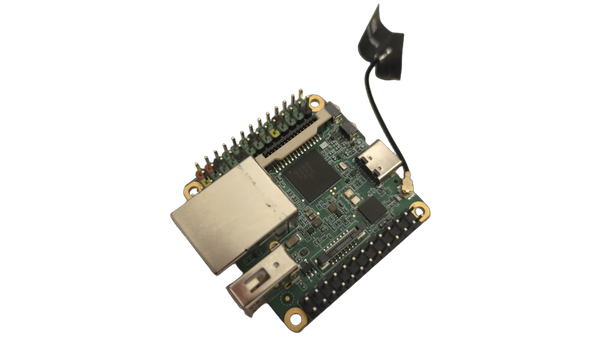
Under sustained computational workloads, powerful SBCs like the Orange Pi 5 (powered by the Rockchip RK3588S SoC) clearly demonstrate the need for thermal dissipation hardware:
- Without thermal protection: Operating as a bare board under full CPU or NPU load, the SoC quickly reaches its built-in thermal threshold, forcing steep frequency cuts within seconds.
- With passive cooling: Mounting a finned aluminum heatsink provides the added surface area needed to dissipate heat into ambient air, helping the board sustain target frequencies through typical day-to-day tasks.
- With active cooling: Adding forced airflow via a low-noise fan sweeps hot air clear of the heatsink fins, completely eliminating throttling even during multi-threaded stress testing or local AI workloads.
Choosing the right thermal strategy
- Passive radiative heatsinks: Extruded aluminum or copper blocks rely on natural air convection. They are silent and durable, making them ideal for headless servers provided the board isn't trapped in a sealed plastic case that acts as an insulator.
- Active cooling (heatsink + fan): Combining a heatsink with a dedicated fan uses forced air to clear heat buildup. This approach is recommended for heavy continuous workloads like video encoding, local machine learning models, or continuous software builds.
- Full-body aluminum enclosures: These designs turn the entire outer chassis into a heat sink, using internal thermal pads to transfer heat directly away from the SoC.
Mounting best practices
- Always use thermal interface material (TIM): Microscopic air gaps between metal and silicon trap heat. Apply a thin thermal pad or an even layer of thermal paste to establish proper conductive contact.
- Clean contact surfaces: Clear away oils or residue on the SoC die using high-purity isopropyl alcohol before mounting hardware.
- Ensure even pressure: Verify that the heatsink sits flat and makes uniform contact across the top of the chip.
- Cool secondary heat sources: Under heavy continuous operation, secondary components such as power management ICs (PMICs), system RAM, and NVMe drives also benefit from smaller passive heatsinks.
Conclusion
As seasonal temperature extremes become more common, proactive thermal management is essential for maintaining server stability and device longevity. Adding proper cooling hardware protects your single-board computers from silent performance bottlenecks and ensures reliable operation through summer heatwaves.